
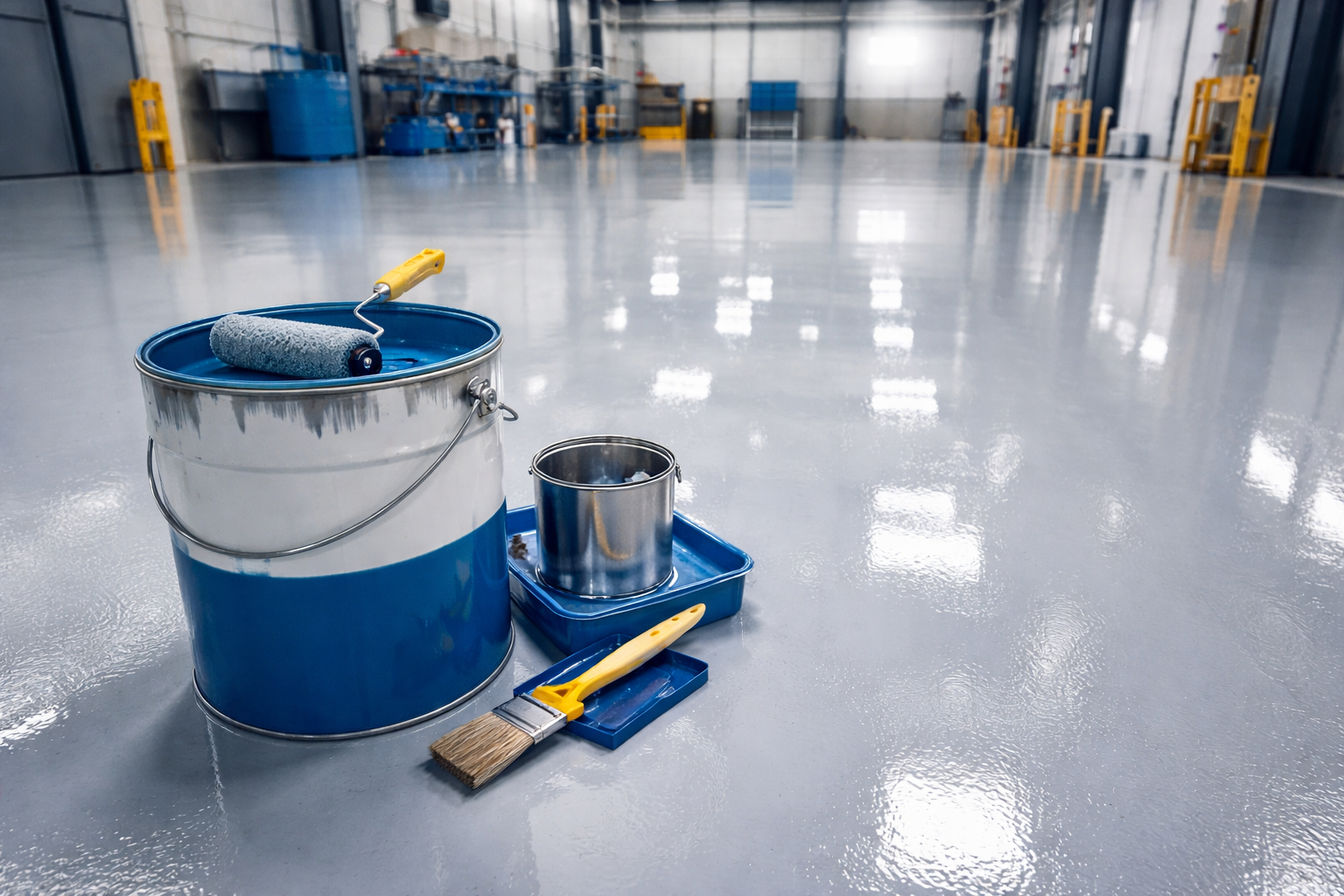
Epoxy paints have become one of the most reliable coating solutions for both residential and industrial spaces. Known for their strength, durability, and glossy finish, these coatings provide long-lasting protection to surfaces that experience heavy use.
From warehouses and garages to hospitals and commercial buildings, epoxy paints are widely used because they create a hard, protective layer that resists chemicals, stains, and abrasion. Their ability to enhance both performance and appearance makes them a preferred choice for modern construction and renovation projects.
This guide explores what epoxy paints are, how they work, their advantages, and where they are commonly used.
What Are Epoxy Paints?
Epoxy paint is a high-performance coating created by combining epoxy resin with a hardening agent. When these components react chemically, they form a strong and durable layer that bonds tightly with surfaces.
Unlike traditional paints, epoxy coatings are designed to provide exceptional resistance to moisture, chemicals, and heavy traffic. Once cured, the coating forms a solid protective barrier that can last for many years with minimal maintenance.
Because of these qualities, many industries rely on epoxy paints to protect concrete, metal, and industrial flooring systems.
How Epoxy Paint Works
The strength of epoxy paint lies in its chemical composition. When the resin and hardener are mixed, they begin a curing process that creates a rigid polymer structure.
This chemical reaction produces a coating that adheres strongly to the surface beneath it. The result is a protective layer that resists peeling, cracking, and wear even in demanding environments.
Modern formulations developed by experienced manufacturers ensure that epoxy paints deliver consistent performance in different conditions. Choosing a trusted Epoxy coating manufacturer often ensures better product quality and long-term reliability.
Key Benefits of Epoxy Paints
Epoxy paints are widely used because they provide multiple practical advantages over standard surface coatings.
- High durability and resistance to wear
- Strong adhesion to concrete, metal, and other surfaces
- Protection against chemicals, oils, and stains
- Smooth and glossy appearance that improves aesthetics
- Easy cleaning and low maintenance requirements
- Long lifespan compared to traditional paints
These features make epoxy paints a reliable solution for areas that require both protection and visual appeal.
Common Applications of Epoxy Paint
Epoxy paints are used across various industries due to their ability to handle heavy usage and harsh conditions.
Industrial Floors
Factories, warehouses, and manufacturing plants often require flooring that can withstand heavy machinery and constant movement. Epoxy coatings help protect the concrete surface while maintaining a clean and professional appearance.
Commercial Spaces
Shopping centers, showrooms, hospitals, and offices use epoxy paint because it creates a smooth and polished surface. The coating not only improves durability but also enhances the visual appeal of large commercial spaces.
Residential Garages and Basements
Homeowners increasingly use epoxy coatings in garages and basements where concrete floors are exposed to moisture, oil spills, and daily wear. An epoxy floor coating creates a tough, seamless surface that is easy to maintain and visually appealing.
Types of Epoxy Paints
There are several types of epoxy paints available, each designed for specific environments and performance requirements.
Water-based epoxy paints are commonly used in residential applications because they are easier to apply and have lower odor levels. These coatings provide moderate durability and are suitable for light to medium traffic areas.
Solvent-based epoxy paints offer stronger adhesion and are often used in industrial environments where durability is critical. They can withstand more demanding conditions compared to water-based alternatives.
Solid epoxy coatings provide the highest level of durability and chemical resistance. These coatings are typically used in factories, warehouses, and laboratories where surfaces are exposed to heavy loads and chemicals.
Factors to Consider Before Using Epoxy Paint
Before applying epoxy paint, it is important to evaluate several factors to ensure the coating performs effectively.
Surface preparation plays a critical role in the success of the application. The surface must be clean, dry, and free from dust, oil, or grease so that the coating can bond properly.
Environmental conditions also influence the curing process. Temperature and humidity levels should fall within the recommended range to achieve the best results.
Proper application techniques and professional installation can also improve the durability and appearance of epoxy coatings.
Maintenance and Longevity
One of the major advantages of epoxy paint is its minimal maintenance requirements. The smooth surface prevents dust, dirt, and spills from penetrating the floor, making cleaning much easier.
Regular sweeping and occasional mopping are usually enough to keep epoxy-coated surfaces looking clean and polished. With proper care, epoxy coatings can last for many years without losing their strength or shine.
Because of this durability, epoxy paints continue to be one of the most practical and cost-effective coating solutions for both residential and industrial applications.
Conclusion
Epoxy paints offer a combination of durability, protection, and visual appeal that few other coatings can match. Their ability to withstand heavy traffic, resist chemicals, and maintain a smooth finish makes them ideal for a wide range of environments.
Whether used in industrial facilities, commercial spaces, or residential garages, epoxy paints provide long-lasting performance while enhancing the overall appearance of surfaces. With the right product selection and proper application, epoxy coatings remain one of the most dependable solutions for protecting floors and structural surfaces.


Join the conversation
You must be logged in to post a comment.