
Startups do not usually fail due to a lack of ideas. They fail because chaos ensues much faster than anyone can imagine.
At first, everything might seem manageable, but then… when growth needs arise, delays occur.
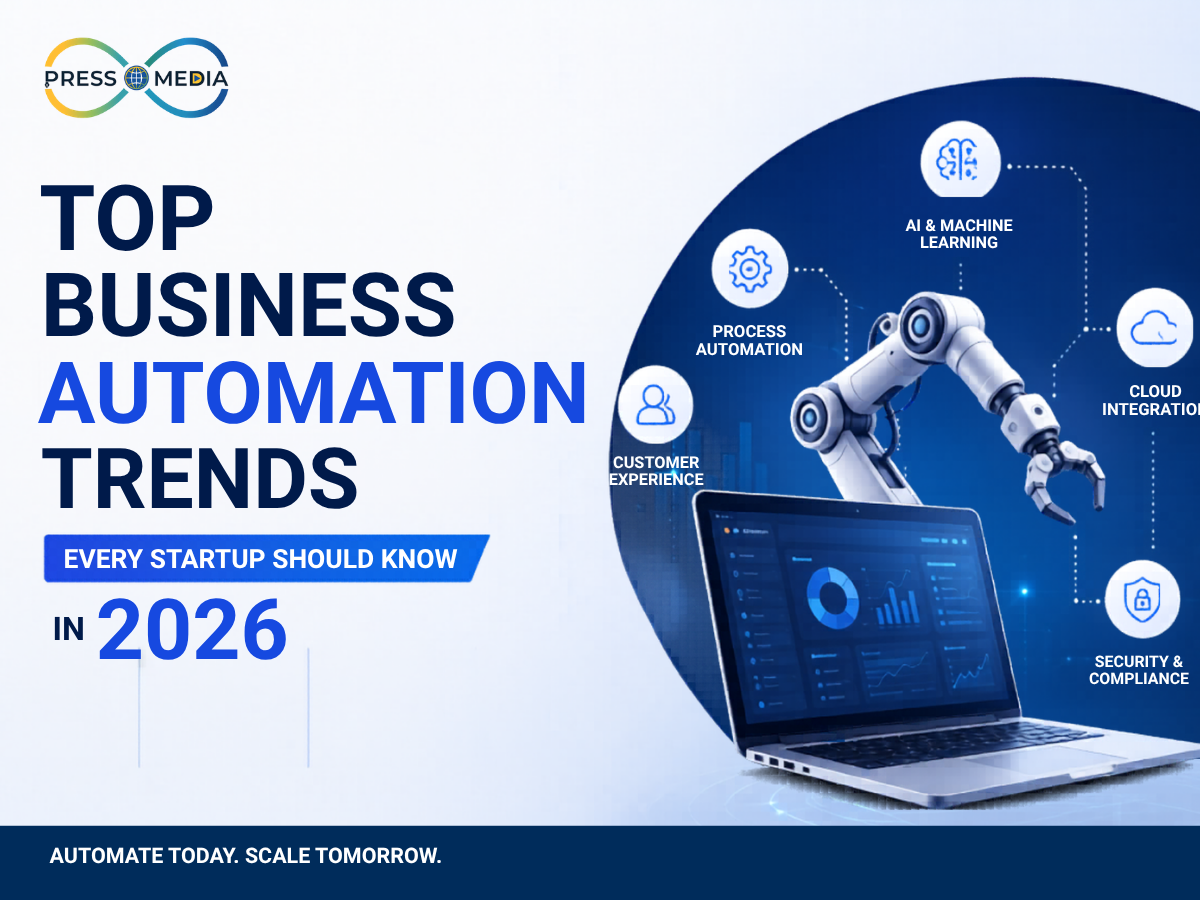
This is precisely why the entire narrative regarding automation in startups has changed in 2026. Businesses are now not thinking about automation as a mere technological upgrade anymore, but rather as a survival infrastructure.
The startups that succeed today may not have bigger teams, but they certainly possess efficient systems from day one. Let us see what the best startup business automation trends in 2026 are.
Why AI Business Process Automation Is Becoming the Default
Just a few years ago, automation would have meant implementing some basic triggering functions.
But what does it look like today?
Today’s AI business process automation takes decisions, prioritizes processes, predicts delays, and even communicates with customers.
This is a major paradigm shift. From just automating routine activities, businesses are moving towards automating processes themselves, as opposed to humans. This means that customer messaging systems may flag angry messages even before opening them. Sales platforms will assign scores to the leads automatically based on their behavior. Operations platforms will spot potential bottlenecks before they become costly issues.
This is the field of rapid growth within business process automation solutions.
The main change here is that businesses don’t require huge enterprise budgets to take advantage of such automation capabilities.
Top Business Automation Trends in 2026
Automated Payroll Software Is No Longer Optional
Traditionally, payroll was one of those processes within organizations that were largely overlooked unless something went wrong.
- Late paychecks.
- Tax errors.
- Compliance problems.
- Manually recording attendance.
That’s why payroll automation will be one of the first process automations startups will make in 2026. Today’s automated human resource systems screens resumes, sync attendance, compute taxes, pay contractors, track benefits, and update compliance information. Advanced solutions even employ artificial intelligence for identifying abnormal payment trends or potential reporting risks before payroll is completed.
The secret advantage is not the saved time.
It’s trust. Trust makes a difference when it comes to retention.
BPM Automation Software for Operation Management
It seems like there is an increasing awareness among startup founders that: Processes cannot be easily scaled by doing everything manually.
This is where BPM automation software comes into play.
Platforms such as Business Process Management solutions allow startups to map out and streamline their workflow processes. This way, instead of using tribal knowledge or never-read SOPs, businesses can build a system.
Because startups usually function without any processes. People just know what needs to be done, but only until someone important leaves, and things go downhill. BPM software lowers the dependence.
Business To Business Marketing Automation
Marketing automation was very robotic back in the day.
- Prospects were receiving identical email sequences.
- Follow-ups were looking like they came from a template
- Campaigns seemed scripted and mechanical
Buyers simply became immune to them. But marketing automation in B2B today, in 2026, is getting to be far more behavior-driven and personalized.
The AI systems are analyzing browsing, engagement, customer relationship management, buying signals, and response time to tailor marketing efforts. Even professionally done marketing automation done well isn’t robotic at all anymore. That is an art form of expert development companies.
Low-Code Automation for Non-Technical Teams
Another big business automation trend among startups is emerging accessibility.
Founders no longer require engineering support for each new automation initiative. With low-code and no-code technology, operations managers, HR departments, marketing personnel, and even finance professionals are able to automate tasks themselves.
This significantly reduces the amount of time required.
Need a customer onboarding system? Need a lead routing process? Require an approval process for expenses?
The ability to create such workflows internally without having to wait weeks for engineering assistance is just one reason why automation services are gaining popularity across the world.
The Real Trend Nobody Talks About: Automation Fatigue
Over-automation can do hidden harm to a company. Young firms easily get addicted to automation and unintentionally take humans out of processes where their input is still important.
Sometimes the employees lack connection, and even processes grow inflexible. But most intelligent companies of 2026 will not automate businesses completely.
The key point is not to take humans away but to eliminate tedious operational load, enabling humans to concentrate on more value-adding tasks. Such a startup will build a better customer experience and run operations efficiently.
That is the real success factor!
Bottom Lines
The best business automation trends for startups in 2026 are to save costs, not cut human resources. Good automation feels invisible, acts as a power to push your business towards faster growth.
That’s the direction modern startups are heading. And honestly, the gap between automated companies and manually operated businesses is about to become very obvious. Hope this guide has been helpful to you. Stay hooked to know more such business automation tips and guides.
FAQs
What is automation in business?
Automation in business is defined as the act of performing repetitive functions using technology without having to do the functions manually. This is beneficial to the organization since it enables it to be more efficient.
Why is automation important in business?
Automation speeds up business processes. It minimizes manual effort, increases efficiency, saves expenses, and frees workers for more important tasks.
How do I set up an automated business?
Start by identifying repetitive tasks that consume too much time. Then use business automation software, workflow tools, or AI systems to automate processes like payroll, customer support, emails, invoicing, or reporting.
Is AI part of automation?
Sure, AI has become an integral part of modern automation today. Automation based on fixed criteria works differently from AI-driven automation because it learns, makes judgments, and becomes more efficient.
Join the conversation
You must be logged in to post a comment.